What helps immunity with frequent infections? How to support your body from within
07 September, 2026

The immune system does not work in isolation from the rest of the body, which is why its efficiency depends on many overlapping factors. Diet, the length and quality of sleep, stress levels, physical activity, hydration and general health all play a role. When colds keep coming back, it is easy to start wondering what works best for immunity. However, there is no single ingredient or product that will change the way the immune system functions in a short time. Regularly looking after the body's basic needs matters far more.
Many people only become interested in immunity when infections become more frequent. That is when questions arise: why do I get ill so often, and can anything be done to help the body cope better with everyday strain?
It is worth remembering that occasional infections are a natural part of life, especially in the autumn and winter months or when you are in frequent contact with large numbers of people. What may give cause for concern, however, is a clear change in how often you fall ill, a severe course of illness or a long time needed to get back to full form. In such a situation, it is a good idea to take a broader look at both your lifestyle and your health.
Why do we catch infections so often? What affects the body's immunity?
The functioning of the immune system is influenced by much more than the season or contact with someone who is ill. Exhaustion, lack of sleep, chronic stress, insufficient energy intake and a monotonous diet can worsen the body's overall condition. Chronic diseases, certain medicines, nutritional deficiencies and intense exercise without adequate recovery also matter. That is why frequent infections in adults are worth analysing in a broader context, instead of reducing them to a question about a single supplement.
People looking for an answer to the question of how to increase the body's immunity often expect a quick solution. In reality, it is more accurate to think about supporting the normal functioning of the body all year round. This means, among other things, regular meals, the right amount of sleep, activity suited to your abilities and time for recovery. Hygiene also matters, especially washing your hands and avoiding touching your face during periods when infections are more common. Effective ways of supporting immunity therefore usually take the form of everyday, repeated habits rather than one-off actions.
How to support immunity from within through your everyday diet?
A well-composed menu provides the energy, protein, fats, vitamins and minerals needed for the whole body to work. A diet for immunity does not have to be based on exotic products or restrictive rules. Its foundation should be variety and regularity. It is worth making sure you eat vegetables, fruit, wholegrain cereal products, sources of protein and healthy fats.
The gut microbiota, which is one of the elements of the complex immune system, is also important. Its normal functioning is supported, among other things, by a varied diet rich in fibre from vegetables, fruit, legumes and whole grains. Fermented foods can further increase the variety of your menu.
Which foods are worth including in your daily menu?
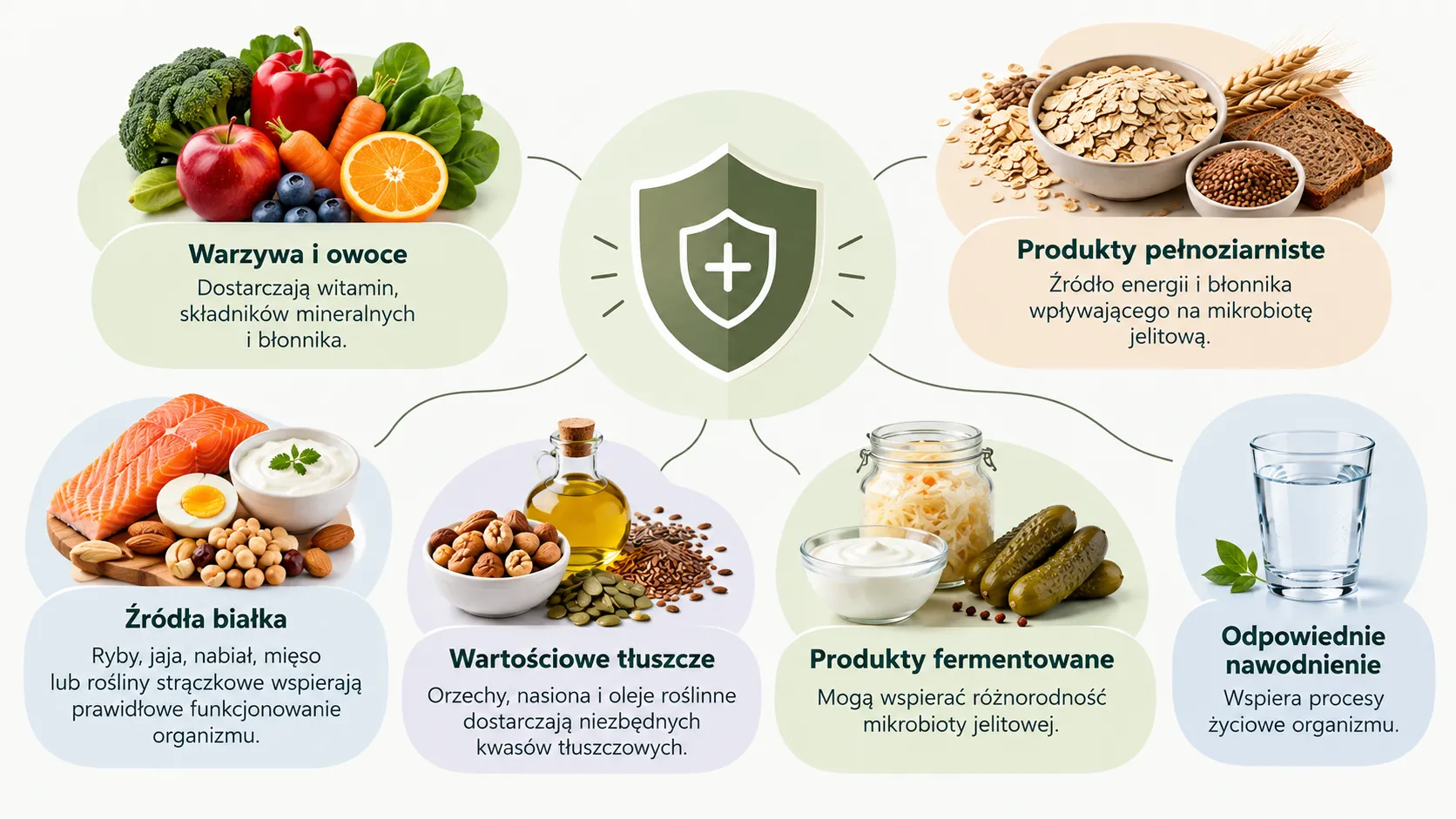
The most practical approach is to build meals from several different food groups. You do not need to reach for the same ingredients every day or focus on individual “superfoods”. Regular variety and the quality of your diet as a whole are far more important. Your daily menu should include:
- vegetables and fruit in different colours,
- groats, oat flakes and wholegrain bread,
- fish, eggs, dairy, meat or legumes as sources of protein,
- nuts, pips, seeds and vegetable oils,
- fermented foods, if they are well tolerated.
This way of eating helps provide many of the nutrients needed for physiological processes to run normally. Anyone wondering how to improve their immunity should start precisely by assessing their daily menu, rather than by searching for a single product.
Vitamins and minerals important for the normal functioning of the body
In the context of immunity, vitamin C, vitamin D, zinc and selenium are often mentioned. Each of these nutrients performs specific physiological functions, but this does not mean that increasing your intake will automatically translate into fewer infections.
People asking which vitamins to choose for immunity should first and foremost look at their diet and any risk of deficiencies. Vitamin C can be found in peppers, parsley leaves, berries and citrus fruit, among others; zinc in meat, eggs, pips and seeds; and selenium in fish, eggs and some nuts, among others. Vitamin D occurs in fewer foods, and its main natural source for the body is synthesis in the skin under the influence of sunlight.
When it comes to everyday nutrition, it is worth remembering that vitamins and minerals for immunity do not work in isolation from the diet as a whole. Individual nutrients take part in many physiological processes, which is why the most important thing is to provide them regularly with varied meals.
If your diet does not cover your requirements or there is a risk of deficiency, you can reach for vitamins and minerals in the form of supplements or medicines, but ideally after first assessing what your body really needs. There is no single universal vitamin for strengthening the body that will work for everyone regardless of their diet and health. Individual nutrients have different functions, and their importance depends on, among other things, diet, nutritional status and individual requirements. That is why supplementation with vitamins for immunity should be treated as a possible addition to, not a replacement for, a well-balanced menu.
Sleep, stress and recovery – why do they matter for immunity?
Sleep is one of the body's basic recovery processes. A lack of it can affect your well-being, ability to concentrate, hormonal balance and the functioning of various systems, including the immune system. One shorter night is usually not a problem, but regularly sleeping just a few hours can gradually increase the strain on the body. That is why people looking for something to strengthen the body should also check whether they are giving themselves enough time to rest.
It can help to keep similar sleeping hours, limit bright light in the evening and create calm conditions in the bedroom.
Chronic stress is equally important, especially when it lasts for weeks or months and is combined with a lack of recovery. It is impossible to eliminate tension from everyday life completely, but you can limit its impact on the body. Regular breaks, exercise, contact with nature, screen-free rest and simple relaxation techniques all help.
If you feel that you need something to strengthen your body, a good first step may be to get your daily rhythm in order. The body works much better when periods of activity alternate with genuine rest.
Exercise, hydration and everyday habits that support the body
Regular, moderate physical activity promotes general health and helps maintain the efficiency of the circulatory system, muscles and metabolism. You do not have to train intensively to benefit from exercise. Walks, cycling, swimming or exercises done a few times a week can be a sufficient foundation. During periods of exhaustion, however, it is best to avoid overloading the body with very intense workouts without adequate rest.
Your daily routine should also include adequate hydration, time spent in the fresh air and basic hygiene rules. Simple steps are a good starting point:
- drinking fluids regularly throughout the day,
- frequent walks and exercise outdoors,
- airing rooms,
- washing your hands after coming home and before eating,
- planning time for rest,
- limiting stimulants and eating meals at regular times.
In certain situations, immunity supplements can complement your diet, but they should not replace a varied diet, the right amount of sleep, exercise and recovery. Immunity tablets are worth considering above all when there is an increased need for specific nutrients or it is difficult to obtain them in sufficient amounts from food. What matters, then, is not the mere fact of taking a supplement, but whether it meets a real need of the body.
For the youngest, too, the foundation of everyday support for the body is a well-balanced diet, the right amount of sleep, exercise and a regular daily routine. It is these elements that have the greatest influence on immunity. Of course, during periods of increased risk of illness, various immunity products for children can be used, but supplementation should only play a complementary role, not form the basis of action. Because children's requirements differ with age and development, immunity supplements for children should be chosen individually and tailored to the child's current needs.
Frequent infections – when is it worth taking a closer look?
Not every infection means that something worrying is happening with your immunity. However, if you fall ill exceptionally often, the illnesses are severe, last a long time, or it takes many weeks to get back to full form, it is worth consulting a doctor.
Particular attention is needed when infections are accompanied by other symptoms, such as unintentional weight loss, chronic weakness, prolonged fever or a clear deterioration in well-being. In such cases, looking for an answer on your own to the question of what helps immunity may only delay the right diagnosis.
It is also worth remembering that supplementation without a diagnosed deficiency does not always bring additional benefit, and some nutrients should not be taken in excessive amounts. Instead of looking for yet another product, it is better to take a close look at the quality of your diet, the length of your sleep, your stress levels, activity and recovery. If infections keep coming back even after these elements have been put in order, it is all the more justified to establish their cause with a doctor.
Everyday habits have a major influence on immunity – what counts above all is a well-balanced diet, the right amount of sleep, regular exercise, hydration and recovery. During periods of increased need, well-chosen supplementation can additionally support the body, especially when it is difficult to obtain all the necessary nutrients from your diet. If infections recur often, last a long time or are severe, it is worth consulting a doctor and establishing their cause. Consistency in looking after the body's basic needs remains the most important thing.
See also
other posts

How to get through autumn without catching a cold
Autumn in Poland is the time when leaves take on...
More about our technology

Liposomal supplements – what are they and why is it worth taking them?
They make it possible to get the most out of...
More about our technology

Liposomal Vitamin D – Advantages Over Traditional Forms and How to Use It
What is Liposomal Vitamin D? Liposomal vitamin D is an...
More about our technology