Why is it worth taking folic acid with iron?
13 March, 2026
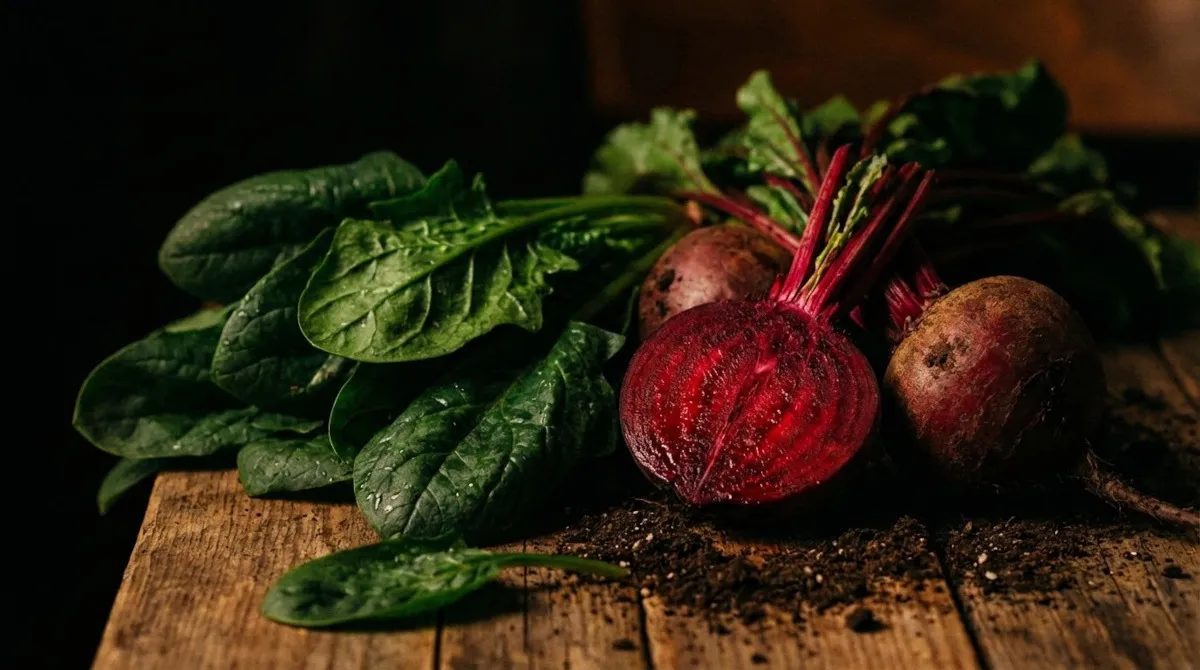
Imagine that iron plays the role of a courier in your body, tirelessly delivering oxygen to every single cell – without it, your body starts running in low gear and everyday duties turn into a challenge. Have you ever wondered why, despite a seemingly healthy lifestyle, you still feel chronically tired or struggle to concentrate? The answer very often lies precisely in a deficiency of iron and folic acid, which together are responsible for the production of red blood cells and the proper transport of oxygen.
Understanding why it is worth combining folic acid with iron may turn out to be a breakthrough in taking care of your own health and energy. In this article you will learn how both ingredients work, what the symptoms of their deficiency are, and what practical tips will help you supplement consciously.
Why is the combination of folic acid and iron so effective? Together they support blood-forming processes
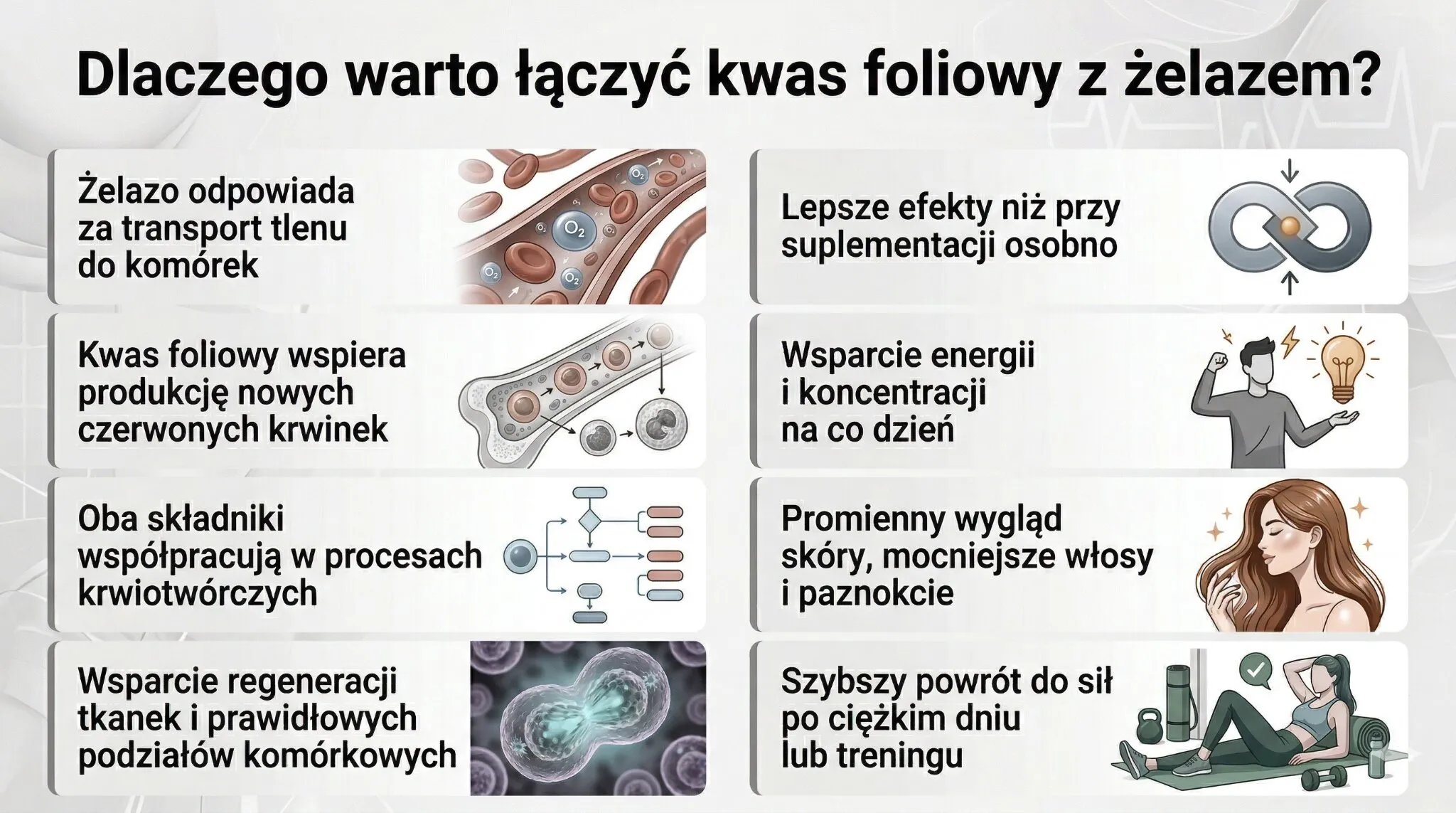
Both ingredients play a fundamental role in the process of creating red blood cells, mutually complementing each other's action in the bone marrow. Iron is an indispensable element of haemoglobin – the protein responsible for binding and transporting oxygen from the lungs to all the tissues of the body. Folic acid (vitamin B9), in turn, takes part in DNA synthesis and in the proper division of cells, thanks to which the body is able to produce new erythrocytes efficiently.
Folic acid and the absorption of iron remain closely connected, because vitamin B9 supports the metabolic processes needed for the body to use iron effectively. That is precisely why combining these ingredients may bring better results than supplementing each of them separately, especially in people struggling with a deficiency of both substances at the same time.
What are the symptoms of iron and folic acid deficiency? Chronic fatigue, pale skin and weakness
A deficiency of this kind of ingredients manifests itself through a series of symptoms that are initially played down or attributed to overwork and stress. When the body does not receive a sufficient amount of iron and folic acid, the production of red blood cells is inhibited, leading to tissue hypoxia and a gradual deterioration of well-being.
It is worth paying attention to the following warning signals:
- a chronic feeling of fatigue that persists despite an adequate amount of sleep;
- pallor of the skin, gums and mucous membranes;
- dizziness and a feeling of light-headedness during sudden changes of body position;
- difficulty concentrating and a deterioration of short-term memory;
- brittle nails and excessive hair loss;
- rapid breathing and heart palpitations during slight physical effort.
Properly selected supplements for iron deficiency can significantly improve blood parameters and general well-being; nevertheless, people experiencing the symptoms listed above should first of all consider consulting a doctor and having laboratory tests done.
Who should consider supplementing folic acid with iron? Women, vegetarians and physically active people
Certain groups of people show a particularly increased need for iron and vitamin B9 due to the specific nature of their lifestyle, diet or physiological condition.
Women of reproductive age lose iron together with menstrual blood, and pregnant women need additional doses of folic acid for the proper development of the foetus. Supplementation with folic acid and iron is also sometimes advisable for people following plant-based diets, because iron of plant origin is absorbed far more poorly than iron from meat products.
Athletes and people who regularly take up intense physical activity also belong to the risk groups, since increased exertion raises the demand for oxygen and may lead to the body's reserves being used up faster. Seniors, on the other hand, often struggle with problems absorbing nutrients, which is why folic acid with iron in the form of a well-absorbed supplement may be a valuable form of support for them.

Which supplement to choose for iron and folic acid deficiency? Iron bisglycinate and its advantages
When choosing a preparation, it is worth paying particular attention to the form of iron, which directly affects the effectiveness of supplementation and tolerance on the part of the digestive tract. Iron bisglycinate stands out among the available forms of this element thanks to its very good bioavailability and gentle action, which means it less frequently causes gastric complaints.
When wondering whether iron can be combined with folic acid, it is worth knowing that Dwatro Laboratories preparations contain both ingredients in a single portion, making regular supplementation easier. An additional advantage of our supplements is liposomal technology, which consists in surrounding the active ingredients with a layer of phospholipids that protect them against degradation in the digestive tract and increase their absorption.
When choosing a preparation, pay attention to the following parameters:
- the form of iron – prefer bisglycinate because of its high absorbability;
- the presence of folic acid;
- the addition of vitamin C, which supports the absorption of iron;
- the absence of unnecessary fillers and artificial colourings;
- quality certificates confirming the purity of the raw materials.
Understanding why it is worth combining folic acid with iron in a single supplement allows you to make a conscious choice of a preparation adjusted to the individual needs of your body.
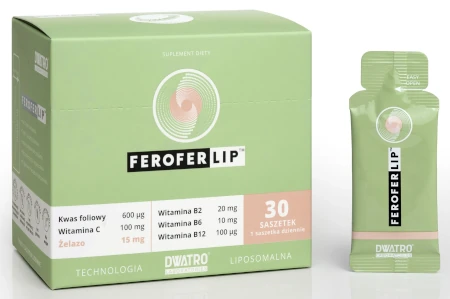
Liposomal iron with folic acid and B vitamins in gel form FeroFerLip™
Does vitamin C increase the absorption of iron? The ingredient that makes the difference
Vitamin C can significantly support the process of iron absorption in the small intestine, converting it into a form that is more easily assimilated by the body. Iron and folic acid combined with vitamin C create comprehensive support for blood-forming processes, which is why our supplements contain all three ingredients in optimally selected proportions.
Also remember that you will achieve the best results by combining conscious supplementation with a balanced diet rich in products such as:
- dark green leafy vegetables, which are a source of folates;
- legumes, which provide non-haem iron and plant protein;
- red meat, which is the best source of haem iron;
- nuts and seeds, which enrich the diet with microelements;
- wholegrain products containing natural B group vitamins.
Conscious care for an appropriate level of iron and folic acid in the body is the foundation of good well-being and everyday energy – start with laboratory tests and with choosing high-quality supplements.
See also
other posts

Why does the belly swell even after a glass of water? The role of the liver in everyday comfort
The feeling of tightness and enlargement of the belly after...
More about our technology
Which vitamins for vegans are worth including in a plant-based diet?
Imagine that your body functions like a precisely designed factory...
More about our technology

How to moisturise your skin from within and why is it so important?
A dull, rough complexion with no radiance can effectively lower...
More about our technology

How to take care of your liver? Supplements, habits, diet
A feeling of heaviness after a meal, chronic fatigue or...
More about our technology

Where to buy good-quality dietary supplements that you can trust?
You type the name of the ingredient you want to...
More about our technology

The Best Antioxidants for Fighting Free Radicals: Which Supplements Are Most Effective?
Antioxidants, on the other hand, are powerful agents that combat...
More about our technology