Ferritin vs iron – how do they differ? How do they affect each other?
24 April, 2026

Understanding the relationship between ferritin and iron is the foundation of a conscious approach to your own health, especially when persistent fatigue or weakness find no explanation in standard tests. Has it ever happened to you that you left the doctor's office with "normal" results, even though your well-being still left much to be desired? The body is able to mask its dwindling iron reserves for a long time, which is why a single parameter rarely reflects the full picture of the situation.
In this article we explain what the difference between ferritin and iron consists in, and how you can support the proper management of this valuable element.
How does ferritin differ from iron? Iron is the current, and ferritin is the battery
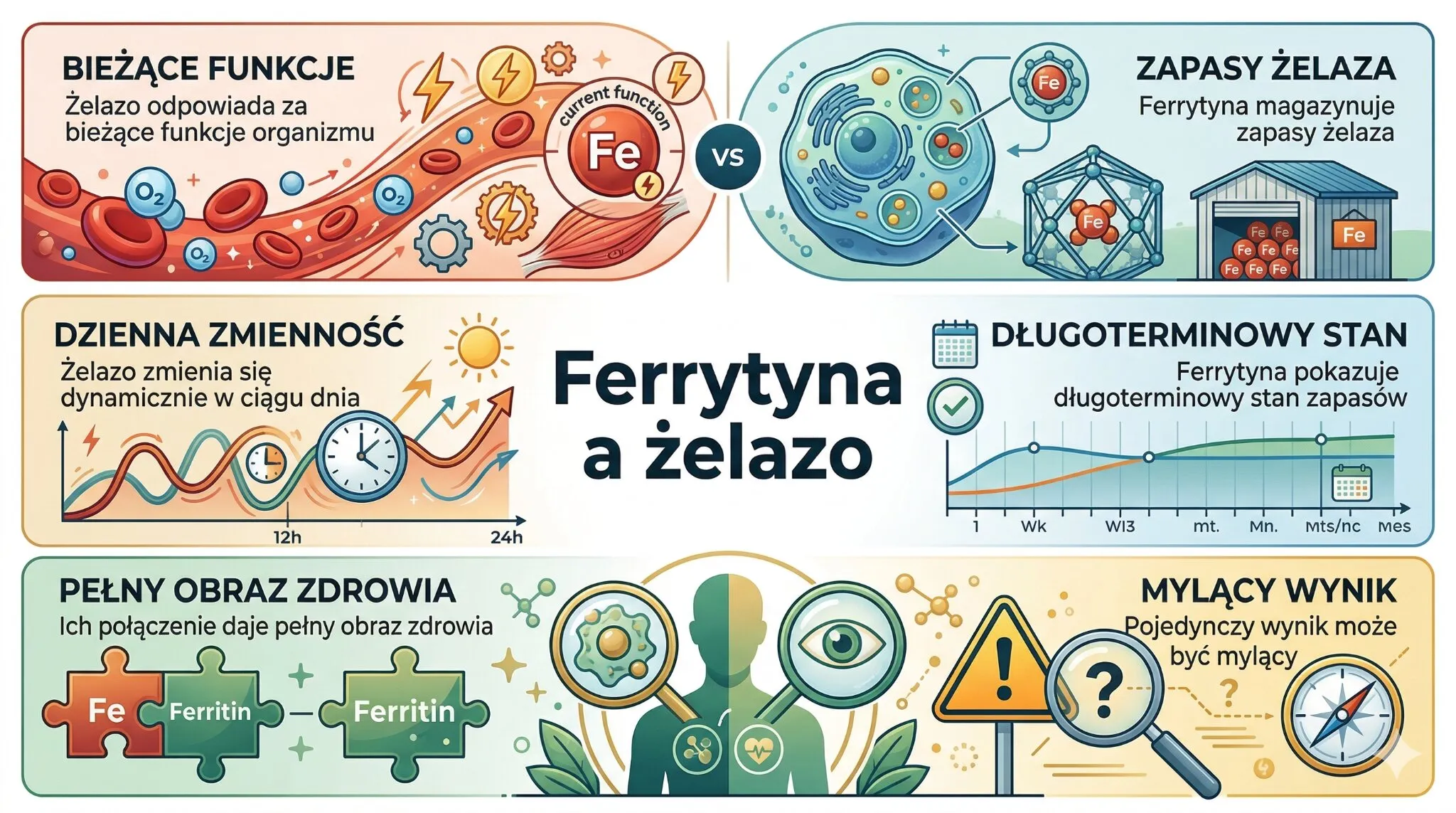
Iron circulating in the blood resembles the electric current flowing in a home installation – it delivers energy here and now, but its level changes dynamically depending on the current demand. Ferritin, on the other hand, acts as a battery, that is, a protein that stores iron in the tissues and releases it whenever the body needs additional resources.
That is precisely why the answer to the question of what ferritin is can be reduced to a simple comparison – it is a key indicator showing how much iron your body has "put aside for a rainy day", and not how much is currently circulating in the bloodstream.
Why can checking the iron level alone be misleading? The level in the blood changes dynamically during the day
The concentration of iron in the serum is subject to considerable fluctuations (it depends, among other things, on the time of day, the most recently eaten meal, the level of stress or the quality of sleep), and therefore a single result may give a falsely reassuring picture.
As we have already mentioned, the first parameter reflects a momentary state, while the second shows the body's long-term reserves. Doctors therefore increasingly often recommend testing both indicators at the same time, because only by putting them side by side is it possible to properly assess iron management and take appropriate preventive or therapeutic measures.
Which symptoms may indicate iron deficiency and low ferritin? Fatigue, pallor, hair loss
A deficiency of iron and ferritin manifests itself gradually, which makes it easy to overlook the first warning signals or to attribute them to exhaustion or stress. Particularly exposed to deficiencies are women of reproductive age (especially with heavy periods), people following a vegetarian or vegan diet, athletes and regular blood donors.
If you notice the symptoms below in yourself, it is worth considering having tests done and reaching for supplements for iron deficiency:
- chronic fatigue that does not go away despite rest;
- pallor of the skin, particularly visible on the face and on the inner side of the eyelids;
- excessive hair loss and a weakened hair structure;
- brittle nails;
- difficulty concentrating and a deterioration of memory.
Why can iron in the blood be within the norm while ferritin is low? An early signal that reserves are running out
A situation in which there is a low level of ferritin alongside good iron is an early alarm signal indicating that the body is starting to reach for its reserves in order to maintain the proper concentration of the element in the blood.
This mechanism works in a similar way to a battery discharging – as long as the battery still has energy, the device functions normally, but when the body's iron reserves are completely exhausted, clear symptoms of deficiency will appear. Testing ferritin makes it possible to detect the problem at an earlier stage and to implement appropriate measures before full-blown anaemia develops.
What can a situation in which ferritin is high and iron is low mean? Inflammation and other causes
Ferritin belongs to the so-called acute phase proteins – its level may rise during infections, chronic diseases and inflammatory states, even when the actual iron resources are becoming exhausted. An elevated result for this parameter requires more in-depth diagnostics, because it does not always mean an excess of iron – it may also mask a deficiency of it.
When interpreting test results, you should consult a doctor, who will take into account the full clinical context and may possibly order additional measurements, and who, in the case of supplementation, may propose preparations in which liposomal technology will improve the absorption of the active ingredients.
How to raise the ferritin level and replenish iron reserves? Diet, absorption and supplementation
When wondering how to raise ferritin, it is worth starting with a balanced diet rich in haem iron (present in meat, fish and seafood) and non-haem iron (occurring in legumes, spinach or pumpkin seeds), while at the same time remembering the factors that influence the absorption of this element.
Vitamin C significantly increases the absorption of iron, whereas coffee, tea or dairy consumed during the same meal may hinder the whole process. People for whom a proper diet is not enough should consider supplementation with preparations containing iron in a form with high bioavailability (e.g. bisglycinate), combined with vitamin C and B group vitamins. And if deficiencies are taking a toll on your vitality, energy supplements may also prove helpful.
Here are some practical dietary tips:
- combine products rich in iron with fruit or vegetables containing vitamin C;
- avoid drinking coffee and tea directly during meals rich in iron;
- consume dairy at an interval of at least two hours from products with iron;
- before starting supplementation, consult a doctor and have follow-up tests done.
A conscious approach to testing and an understanding of the interdependence between iron and ferritin make it possible to detect deficiencies early and counteract them effectively. Take care to monitor both parameters regularly, listen to the signals sent by your body and make well-thought-out decisions concerning your diet and possible supplementation – your health and energy are worth it.
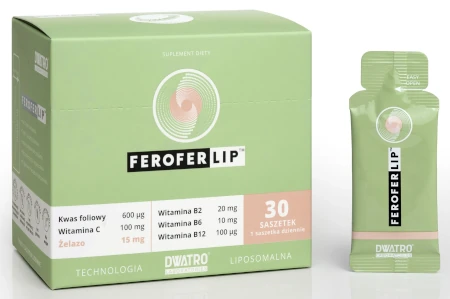
Liposomal iron with folic acid and B vitamins in gel form FeroFerLip™

See also
other posts

Why is it worth taking folic acid with iron?
Imagine that iron plays the role of a courier in...
More about our technology

How to take care of your liver? Supplements, habits, diet
A feeling of heaviness after a meal, chronic fatigue or...
More about our technology

How to moisturise your skin from within and why is it so important?
A dull, rough complexion with no radiance can effectively lower...
More about our technology

Magnesium for athletes – why is it worth ensuring an adequate intake?
Physical activity engages the muscles, the nervous system and numerous...
More about our technology

What is worth supplementing in summer?
Imagine that in summer your skin works like a shield...
More about our technology

The Best Antioxidants for Fighting Free Radicals: Which Supplements Are Most Effective?
Antioxidants, on the other hand, are powerful agents that combat...
More about our technology