How to take care of your joints when working a sedentary job?
15 June, 2026
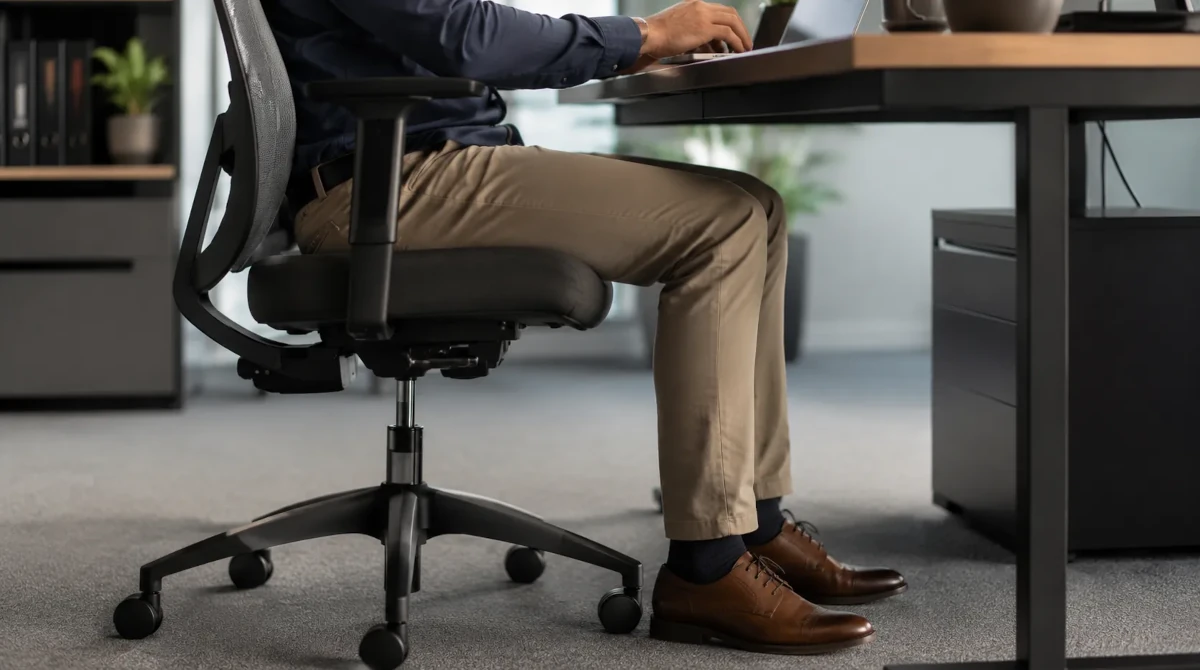
The clock shows 4:00 p.m. For several hours your attention has been focused on code, spreadsheets, financial analyses or a graphic design project. At last you get up from your desk to make some tea. You push the chair back, straighten your legs and suddenly you hear a characteristic crack in your knees. Tension appears in the lower section of your back, your hips are stiff, and your first steps resemble a cautious “starting up of a machine” rather than free movement.
Joints in office work are exposed to overloads of a different kind than during intensive physical exertion. The problem is not always a lot of movement, but the lack of it. Sitting for many hours limits the natural work of the muscles, reduces the circulation of the joint fluid and favours stiffness, which over time may develop into distinct discomfort. Joint pain in a sedentary lifestyle often develops gradually — first comes a feeling of resistance after getting up from the chair, later tension in the knees, hips, wrists or spine. The joint cartilage covers the ends of the bones and protects them against friction, but it has no blood supply of its own. Nutrients reach it mainly by way of the joint fluid, that is, the synovial fluid. This mechanism works best when the body moves regularly – cartilage resembles a sponge which needs alternating compression and release in order to retain its elasticity.
That is why the answer to the question of how to take care of your joints when working a sedentary job does not come down solely to a comfortable chair or a straight back at the desk. What counts is daily movement, short breaks, hydration, an appropriate diet and the support of building components for the connective tissue. In this article we will show how small changes in the office routine can help reduce stiffness, improve comfort of movement and protect the joints against the consequences of prolonged sitting.
How to recognise that your joints are suffering because of sedentary work?
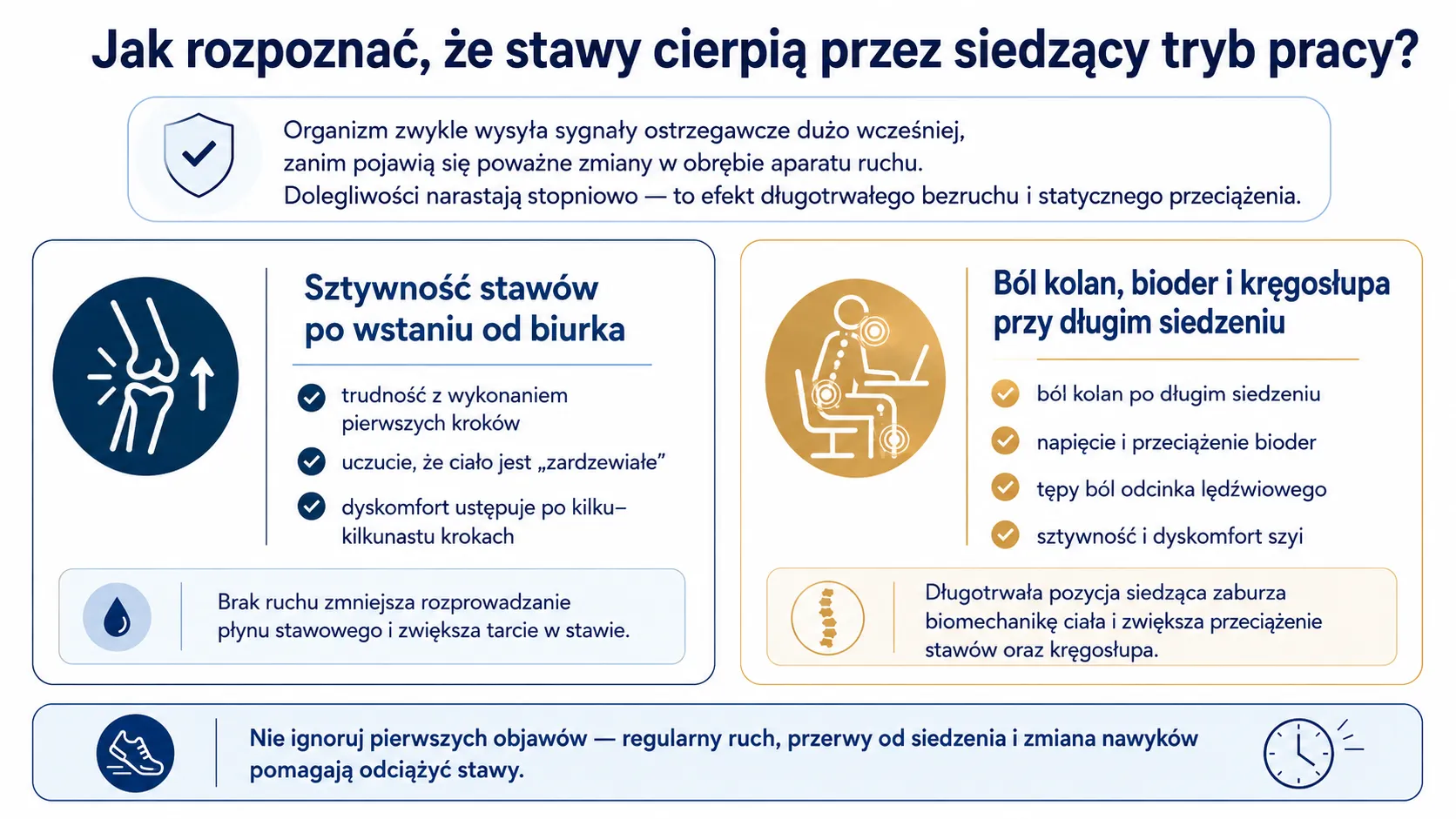
The human body usually sends clear warning signals long before serious, irreversible structural changes occur within the locomotor system. Joint pain in a sedentary lifestyle does not appear overnight – it is the cumulative effect of weeks, months and often even years of continuous, static overload. Office workers routinely play down these symptoms, attributing them to momentary fatigue or to stress.
Joint stiffness after getting up from the desk
This is one of the first and most classic symptoms showing that your joints in office work urgently need a change of your existing habits. If after two or three hours spent in a chair you feel a distinct difficulty in taking the first smooth steps, and your body gives the impression of being “rusty”, this is a clear sign from the locomotor system. A lack of movement causes the volume of the joint fluid to decrease, and the synovial fluid is not spread evenly over the joint surfaces. This increases friction and generates the characteristic resistance which passes only after a dozen or so steps, when the joint pump starts working again.
Pain in the knees hips and spine during long sitting
Remaining in a seated position for a long time forces an unnatural, static posture on our body. Knees bent constantly at an angle of 90 degrees (or tucked deeply under the chair) are subjected to continuous, elevated patellofemoral pressure. The hip joints, in turn, with their constant flexion lead to a distinct contracture of the hip flexor muscles, which as a consequence negatively changes the biomechanics of the whole pelvis and puts strain on the sacroiliac joints. The spine, deprived of natural muscular support during immobility, begins to lose its physiological curvatures, which causes a dull, troublesome pain in the lumbar and cervical sections.
Exercise and movement as the foundation of joint health in sedentary work
When wondering how to strengthen your joints when working at a desk, we have to revise our approach to daily physical activity completely. Many people live in the mistaken belief that an intensive, hour-long workout at the gym or a fitness session after leaving the office fully compensates for the damage caused by eight hours of immobility. Research in the field of ergonomics clearly indicates that getting up from your desk every 30–45 minutes for a mere 2–3 minutes of light movement is considerably more effective for the health of the locomotor system than one intensive exercise session at the end of the day.
Setting the body in motion regularly activates the circulation of the synovial fluid. Here are simple, dedicated exercises for the joints in sedentary work which you can introduce into your office day plan without needing specialist equipment or changing into sportswear:
- The office synovial pump. While sitting at your desk, lift your feet slightly and perform slow, wide circles in the ankle joints (ankles) and at the same time in the wrists. Do 15 rotations in each direction.
- The knee pendulum. Move slightly away from the desktop, raise your legs alternately to a horizontal position, tensing the quadriceps muscle, and then lower them slowly. This exercise relieves the patellofemoral joints perfectly.
- Active mini-squats. While waiting for documents to print or for coffee to brew in the office kitchen, do 5–10 controlled squats, remembering to guide your knees outwards and to activate the gluteal muscles.
- Stretching the hip flexors. Stand up, take a lunge forward with one leg and gently straighten the rear leg, tensing your buttocks. This will help relax the structures of the hip joint.
Apart from the exercises themselves, ergonomics is of fundamental importance. Set the height of your chair so that your feet rest flat on the floor and the angle in the knee and hip joints is slightly above 90 degrees. If you have the possibility, consider using a height-adjustable desk (of the sit-stand type), which allows you to work alternately in a sitting and a standing position.
Diet and hydration versus joint health
Movement and ergonomics constitute mechanical stimuli, but for efficient regeneration the connective tissue needs constant access to the right nutrients. What lands on your plate and in your mug throughout the whole office working day directly defines the quality of the joint fluid.
Hydration of the body is one of the most underestimated and at the same time key factors determining the efficiency of the locomotor system. The joint fluid consists predominantly of water. When you drink too few fluids during the day, the body starts to save water by limiting its distribution to the peripheral tissues – and it is the joints that suffer first. Dehydration translates directly into a reduction in the volume of the synovial fluid and a marked increase in its density. As a result, the friction between the joint surfaces rises drastically, which may accelerate the mechanical destruction of the cartilage. Always having a jug of water at hand is an absolute basis of prevention.
Which foods can support the condition of the joints?
The everyday diet of a person who spends time at a desk should abound in compounds with an antioxidant and anti-inflammatory action. It is worth permanently including in your menu:
- Oily sea fish (e.g. wild salmon, mackerel, sardines), which are an excellent source of omega-3 fatty acids showing properties that soothe inflammatory states within the connective tissue.
- Berry fruits and cruciferous vegetables, which provide a powerful dose of vitamins and of polyphenols that neutralise free radicals.
- Long-cooked bone broths, rich in amino acids (proline and glycine), which constitute a natural base for the production of collagen.
What to avoid in your diet when you have joint problems?
From your daily menu it is worth eliminating without exception the products that intensify systemic inflammatory processes. These include above all: highly processed food, refined vegetable oils rich in omega-6 acids, and simple sugars present in popular office snacks and sweet fizzy drinks. An excess of sugar leads to the process of glycation, that is, the destructive stiffening of healthy protein fibres in the body.
Supplementation for the joints in a sedentary lifestyle
Introducing the right movement habits and a balanced diet is the absolute foundation of health; however, under chronic, many-hour static load the body may need more concentrated micronutrient support. In such situations it is worth considering targeted joint supplements for office work.
Fish collagen and its role in maintaining joint cartilage
In order to fully understand the justification for using it, it is worth first recalling what collagen is. It is a key structural protein which constitutes a kind of scaffolding for most of the tissues in our body, including the tendons, the ligaments and the joint cartilage. With age and under the influence of a lack of physical activity, the natural synthesis of collagen weakens. Studies indicate that high-quality Naticol® fish collagen can effectively support the integrity and the elasticity of cartilaginous structures. Thanks to its very low molecular weight it is characterised by excellent absorbability, providing the body with the peptides it needs to produce its own connective tissue proteins.
Glucosamine and chondroitin
These are natural, organic chemical compounds that form part of the structure of joint cartilage. Glucosamine takes an active part in the biosynthesis of proteoglycans – the building substances of the extracellular matrix. Chondroitin, in turn, is responsible for the proper binding of water in the cartilage, which gives it its characteristic elasticity, cushioning and resistance to mechanical compression. The level of these components may fall with chronic immobility, which is why supplementing them may support the maintenance of proper biomechanical functions.
Hyaluronic acid and the hydration of the joints from within
Hyaluronic acid is a fundamental component of the synovial fluid. It is precisely this acid that determines the lubricating and viscoelastic properties and the viscosity of the synovial fluid. It works like an advanced intra-articular shock absorber, reducing friction and protecting the surfaces of the bones against mechanical damage. Supplementation with hyaluronic acid contributes to an improvement in the hydration of the joint structures from within, making smooth and free movement easier.
Vitamin C D and zinc as components supporting the connective tissue
Effective protection and support of the locomotor system require a synergistic approach. Vitamin C plays an irreplaceable role as an essential cofactor in the process of synthesising new collagen fibres – without its presence the body is not able to structure the proteins properly. Vitamin D has a significant influence on the proper functioning of the muscles and on the maintenance of healthy bones, which translates directly into the stabilisation of the entire locomotor system. Zinc, in turn, supports regenerative processes at the cellular level.
All these key ingredients can be found in modern preparations that look after the locomotor system. An example of comprehensive support based on the synergy of active ingredients are advanced dietary supplements for the joints. The preparation FlexLip® liposomal fish collagen with glucosamine and chondroitin for the joints combines in a unique way Naticol® fish collagen, glucosamine, chondroitin, hyaluronic acid and vitamins C and D. What is extremely important from the biological point of view, the innovative liposomal technology used in it makes it possible to enclose the active molecules in special lipid envelopes. This protects the ingredients against the aggressive action of the gastric juices and may significantly raise their bioavailability, facilitating transport directly to the overloaded joint structures.
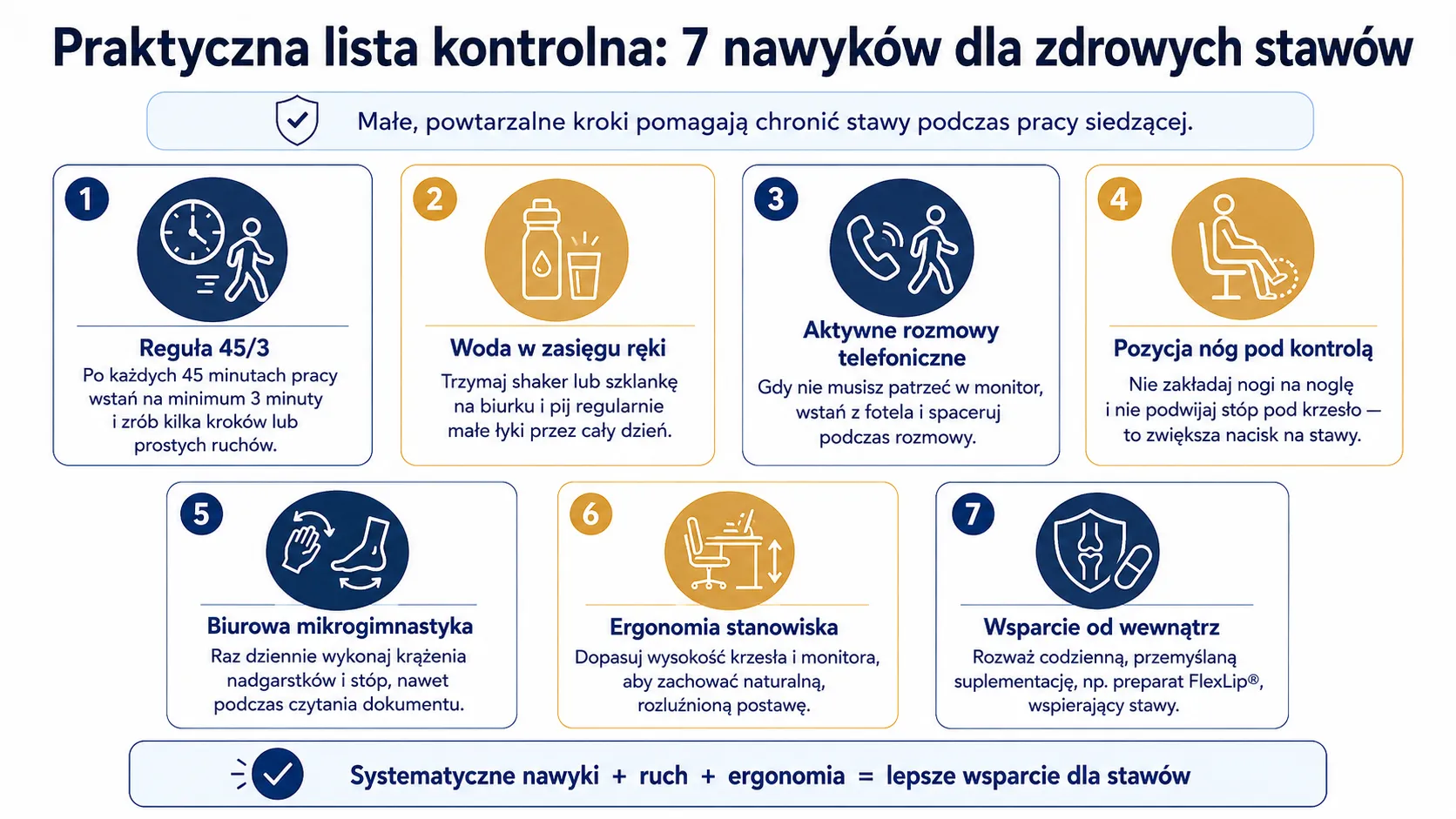
Introducing changes into everyday office life does not have to involve a revolution. Small, repeatable steps add up to long-term success, effectively protecting your joints against the negative consequences of a sedentary lifestyle. Here are 7 simple habits that are worth introducing into your routine starting tomorrow.
Your joints are precise mechanisms that allow you to carry out your daily tasks and your passions. Prolonged sedentary work sets an enormous challenge before them, but with an active approach, regular micro-breaks and appropriate nutrition they can retain full efficiency and elasticity for many years. Give your body a chance to move during the day, and it will repay you with lightness every time you get up from your desk.
See also
other posts

How to support the regeneration of joints after a workout?
You wake up in the morning after a demanding run,...
More about our technology
Do our joints need chondroitin? The answer may surprise you
Do our joints need chondroitin? The answer may surprise you...
More about our technology