Protein – definition, types, functions and importance in the diet
Protein – definition, types, functions and importance in the diet
What is protein?
A protein is a large biological molecule consisting of chains of amino acids which are joined by peptide bonds. The amino acids of which proteins are built perform a variety of functions in the body. Every protein has its own unique structure, dependent on the kind of amino acids, on their order and on their spatial organisation.
Proteins are indispensable for life, because they take part in many key processes, such as:
- The building and regeneration of tissues,
- The transport of substances in the body,
- Enzymatic reactions,
- The regulation of metabolism.
Thanks to proteins the body can function fully, maintaining homeostatic balance.
Types of proteins
Proteins can be divided into several groups, taking into account their functions and their structure. Here are the main types of proteins:
Structural proteins
Structural proteins play a role in the building of tissues, cells, organelles and other elements of the body. They are the main component of structures such as:
- Collagen – a protein which is the basic building material of the skin, bones, tendons and ligaments. It is responsible for the elasticity and strength of these tissues.
- Keratin – a protein which is found in the hair, nails and skin, giving them resistance to mechanical damage.
Enzymatic proteins
Enzymatic proteins act as catalysts of chemical reactions, accelerating the course of metabolic reactions in the body. Examples are:
- Amylase – the enzyme responsible for the breakdown of starch in the digestive tract.
- Lipase – the enzyme that digests fats, which acts in the stomach and the intestines.
Transport proteins
Transport proteins are responsible for the transport of substances across cell membranes or within the body. They include, among others:
- Haemoglobin – the protein that transports oxygen in the blood.
- Albumins – plasma proteins which transport fatty acids and hormones.
Immune proteins
Immune proteins, that is antibodies, are responsible for defending the body against pathogens such as bacteria and viruses. Examples of immune proteins are:
Immunoglobulins – proteins which recognise and neutralise foreign molecules in the body.
Hormonal proteins
Hormonal proteins play a role in the regulation of metabolic and homeostatic processes. An example is:
Insulin – a protein which regulates the level of glucose in the blood, supporting its transport into the cells.

The functions of proteins in the body
Proteins perform key functions in the body, both at the level of the cell and of the whole organism. Here are the most important functions of proteins:
- The building and regeneration of tissues: Proteins are the basic component of the cellular structures and tissues of the body. They regenerate damaged cells and create new ones, which is indispensable in the process of the growth and repair of tissues.
- The production of enzymes and hormones: Enzymatic proteins act as catalysts of biochemical reactions, while hormonal proteins regulate metabolic processes, such as the metabolism of glucose or the synthesis of proteins.
- The transport of substances: Transport proteins, such as haemoglobin, ensure the transport of essential substances, e.g. oxygen or fatty acids, to the cells and organs.
- Protection against diseases: Immune proteins are responsible for defending the body against pathogens, including viruses, bacteria and other harmful microorganisms.
- The management of water and electrolyte balance: Proteins such as albumins play an important role in maintaining the balance of fluids and electrolytes in the body.
The importance of protein in the diet
Proteins are an indispensable component of the human diet, which has to supply them in appropriate amounts in order to maintain the proper functioning of the body. Protein is particularly important in the diet of physically active people, children, pregnant women and older people, who may have a greater requirement for this nutrient.
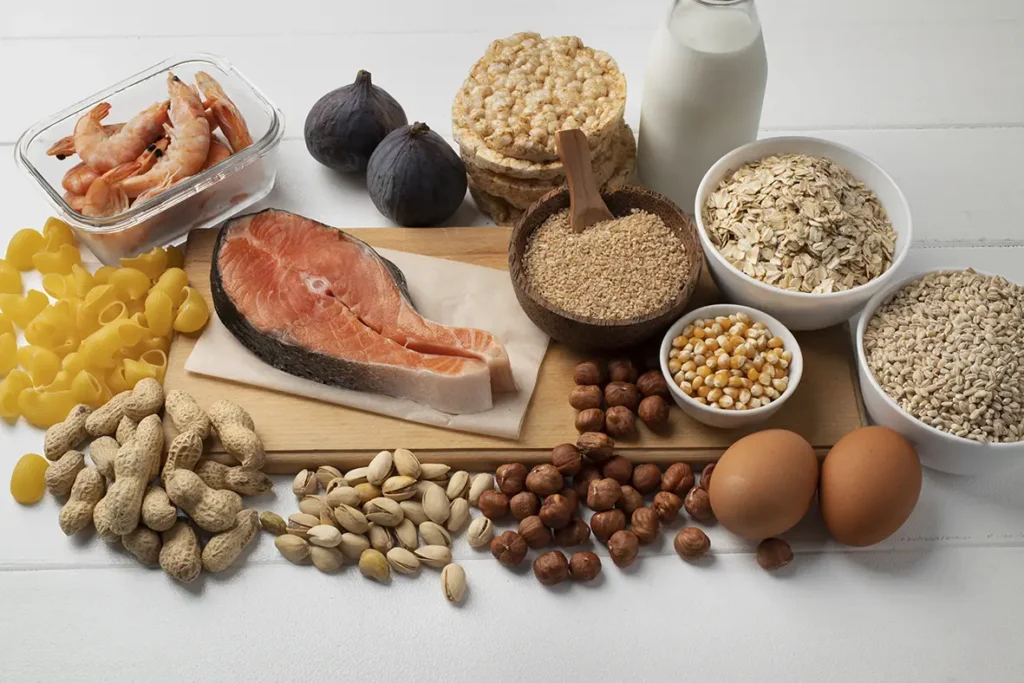
Proteins are components that have to be supplied in the diet, because the body is not able to synthesise them fully. The sources of protein are divided into:
- Complete proteins – they contain all the essential amino acids, such as proteins of animal origin (meat, eggs, fish, dairy products).
- Incomplete proteins – they do not contain all the amino acids, such as proteins of plant origin (legumes, nuts, seeds).
The optimal amount of protein in the diet depends on age, sex, physical activity and state of health. The average daily protein requirement for an adult is about 0.8 g per kilogram of body weight, but physically active people or athletes may need as much as 1.5–2 g of protein per kilogram of body weight.
Protein in supplementation – is it worth it or not?
Protein supplementation has become popular, especially among athletes and physically active people. Protein supplements, such as protein preparations (e.g. whey protein, casein, plant protein), can be a convenient way of increasing the daily intake of protein, particularly when it is difficult to supply it in a traditional diet.
Excessive consumption of protein may, however, lead to an overloading of the kidneys and to other health problems. For this reason, before starting supplementation it is worth consulting a dietitian or a doctor.
Summary
Protein is one of the most important nutrients and performs a number of key functions in the body, from the building of tissues to the production of enzymes and hormones. An appropriate amount of it in the diet is of significant importance for health, and deficiencies of protein may lead to serious health problems. A diet rich in protein – both animal and plant – is crucial for the proper functioning of the body. Protein supplementation may be beneficial in cases of an increased requirement for this nutrient, but it should take place under the supervision of a specialist.

My name is Dorota Wątróbska-Świetlikowska, I am a pharmacist and a scientist with a postdoctoral degree (habilitation) in pharmaceutical sciences. I decided to combine my scientific knowledge and my experience in order to create dietary supplements of the highest quality.
My passion and main area of research are submicron dispersed systems, such as submicron emulsions, liposomes and lipospheres. After obtaining my doctorate I turned my attention to the practical aspects of parenteral nutrition, combining the needs of the patient with the possibilities available to the pharmacist. Quality, safety and efficacy are the most important things for me, which is visible both in my scientific work and in my approach to creating Dwatro Laboratories® supplements.